
Wednesday, October 21, 2026, 7:42 AM PT by ORM Editorial Team
Demandbase announced the launch of three new AI agents at its annual GO conference in New York City. The agents extend the company's agentic marketing capabilities to help B2B marketers address business-to-agent strategies.
The AEO Agent tracks and influences how AI assistants portray brands down to specific members of the buying group. Marketers can compare how major AI assistants describe their company, assess visibility across questions, and identify sources informing AI-generated answers.

Tuesday, October 20, 2026, 7:37 AM PT by ORM Editorial Team
Salesforce announced it has signed a definitive agreement to acquire Braze for approximately $5.66 billion in enterprise value. Holders of Braze Class A common stock will receive $47.50 in cash per share.
The deal is expected to close in Salesforce's fiscal year 2028, pending shareholder approval and regulatory clearances.

Friday, September 11, 2026, 7:43 AM PT by ORM Editorial Team
CMOs face decisions on which marketing capabilities to develop internally as AI vendors standardize common functions across organizations, according to MarTech.
AI is collapsing the distinction between technology strategy and product strategy. Technology strategy previously centered on evaluating software, negotiating contracts, and integrating platforms. CMOs now address product decisions alongside purchasing decisions.
Thursday, September 10, 2026, 1:07 PM PT by ORM Editorial Team
A September MarTech Conference session titled “The engagement illusion: What actually gets attention and what gets ignored” examined why increased content production has not translated into stronger audience attention.
Marketing leaders now have access to more content tools, impressions, and engagement data than ever before, according to [MarTech](https://martech.org/the-engagement-illusion-what-actually-gets-attention-and-what-gets-ignored/).

Thursday, September 10, 2026, 9:49 AM PT by ORM Editorial Team
Heinz Marketing states that the best operating models improve performance while giving teams more clarity, autonomy and control. The firm notes that marketing leaders have faced pressure to produce more with the same or fewer resources, yet defines true efficiency as teams understanding priorities, owning specific work, accessing needed information and avoiding avoidable complexity.
According to Heinz Marketing, organizations have often equated efficiency with higher output volume rather than...

Thursday, September 10, 2026, 7:19 AM PT by ORM Editorial Team
A report from the CMO Council and MartechTribe analyzed 988 martech stacks across seven industries and 49 categories. It compared the breadth of technology capabilities and the maturity of people and processes using them. Outperformers were defined as the top 30 percent in revenue per employee within each industry.
Wednesday, September 9, 2026, 7:36 AM PT by ORM Editorial Team
The CMO role is evolving from a creative focus to a technical leadership position driven by AI, revenue accountability, and demands for clear ROI, according to MarTech.
Modern CMOs must personally master technical workflows and data architecture. A formalized martech background is becoming mandatory. The next generation of CMOs will rise from marketing operations, according to MarTech.
The CMO and CIO are forming a new power duo with shared ownership of technology investments.
Tuesday, September 8, 2026, 10:54 AM PT by ORM Editorial Team
B2B marketing leaders track expanded sets of signals including website traffic, AI visibility, and AI referral traffic, yet only 38% correlate those metrics to pipeline or revenue according to [Demand Gen Report](https://www.demandgenreport.com/industry-news/news-brief/b2b-marketing-leaders-struggle-to-prove-business-impact-10fold/54356/).
More than half of respondents now track a broader mix of business-impact signals.
Tuesday, September 8, 2026, 8:41 AM PT by ORM Editorial Team
Most B2B teams will wrap up their 2027 plans between now and Thanksgiving. If you don’t have your own CTV data by then, you’ll either drop the budget line or include a number you can’t back up, according to MarTech.
Run a narrow test now to learn what CTV costs against your actual accounts and whether the channel is worth funding next year.

Tuesday, September 8, 2026, 7:24 AM PT by ORM Editorial Team
A SOCi analysis of Local Visibility Index data found expanding restaurant chains averaged an LVI score of 61.4 while contracting chains averaged 46.6. The 14.8-point gap appeared across search, reviews, social, and AI channels. Brands opening hundreds of locations included Culver’s, Texas Roadhouse, and Nothing Bundt Cakes.
Friday, September 4, 2026, 8:03 AM PT by ORM Editorial Team
Acoustic has launched Acoustic AI, an agentic marketing tool that continuously evaluates live first-party customer behavior to identify emerging revenue opportunities and assist marketers in acting on them in real time.
Acoustic AI is built on the behavioral intelligence and orchestration capabilities of Acoustic Connect.
Friday, September 4, 2026, 7:03 AM PT by ORM Editorial Team
Marketing leaders are confronting a strategic choice on where customer data, intelligence, and decision-making should reside as autonomous AI agents rise and composability becomes standard, according to MarTech.
Early CDPs unified fragmented data to support audience building, personalization, and campaign execution. Composable CDPs introduced a modular, warehouse-centric model to reduce duplication and increase control over technology choices.

Thursday, September 3, 2026, 8:41 AM PT by ORM Editorial Team
Seven marketing technology firms named new C-suite leaders this month according to [Demand Gen Report](https://www.demandgenreport.com/industry-news/news-brief/marketing-movers-whos-moving-up-executive-appointments-across-7-martech-firms/54427/). AI-driven customer experience and go-to-market alignment emerged as the through-line across marketing, finance and revenue roles.

Wednesday, September 2, 2026, 7:05 AM PT by ORM Editorial Team
On Monday OpenAI announced the ability to build a ChatGPT campaign in under a minute. The company stated that its AI can turn an advertiser’s website into a campaign by entering a URL, analyzing the business, products, objectives, and target customers, then suggesting conversation placements, generating creative and copy, and collecting geography, bidding, and billing details.

Tuesday, September 1, 2026, 11:17 AM PT by ORM Editorial Team
Marketing executives overseeing AI programs described receiving large volumes of formatted documents that require substantial editing time. One leader noted the hours and tool credits consumed correcting such output. Another prohibited sending AI-generated material, stating it would not be read.

Tuesday, September 1, 2026, 8:47 AM PT by ORM Editorial Team
AI is delivering measurable gains for marketing, but proving what those gains are worth is surprisingly difficult. As spending accelerates, the gap between using AI and demonstrating its financial impact is becoming harder to ignore.
By 2029, AI will power more than 50% of all U.S. marketing activity, according to The CMO Survey. Last year, AI helped sales productivity and customer satisfaction increase by 14.1% and 10.8%, respectively, while marketing overhead decreased by 14.6%.

Friday, August 28, 2026, 4:14 PM PT by ORM Editorial Team
MarTech announced a free online conference session titled "The AI performance shake-up: What’s really driving results across channels now" scheduled for Sept. 2, 2026. The session will address how algorithms in search engines, ad platforms, and automation tools now decide audience selection, creative allocation, and optimization.
Paid media channels now automatically handle targeting and creative allocation. Search engines use AI answers that shift traffic patterns.

Tuesday, August 25, 2026, 11:30 AM PT by ORM Editorial Team
Auxia today announced the launch of Auxia Agent Studio, a product where marketers engage artificial intelligence agents to plan, build, and launch campaigns across a team’s existing stack, according to [Demand Gen Report](https://www.demandgenreport.com/industry-news/news-brief/auxia-launches-new-operating-system-for-marketing-teams/54237/).

Tuesday, August 25, 2026, 5:05 AM PT by ORM Editorial Team
Marketing teams apply AI to build campaigns, write copy, segment audiences, and identify customers at risk of leaving. When results do not align with expectations, the underlying data systems are often the cause according to MarTech.
Financial services face oversight from FINRA when trade and position data do not match. Healthcare organizations encounter similar requirements under privacy rules.

Monday, August 24, 2026, 4:54 AM PT by ORM Editorial Team
Autonomous marketing agents shift from basic workflow automation to independent decision-making, yet organizations evaluating these tools only on baseline platform subscription fees risk unexpected budget overruns from hidden infrastructure and integration requirements, according to MarTech.
Unlike fixed-subscription software, autonomous agents incur variable costs based on computational volume. Every task requires passing text data through model endpoints.
Friday, August 21, 2026, 9:09 AM PT by ORM Editorial Team
Marketing organizations equipped with autonomous, cross-functional teams deliver more campaigns after adopting AI tools without increasing headcount, according to [MarTech](https://martech.org/what-the-teams-getting-the-most-from-ai-do-differently/).
Teams that purchased AI tools often see no change in campaign speed because the issue is organizational structure rather than technology.

Thursday, August 20, 2026, 9:10 AM PT by ORM Editorial Team
Business websites accounted for nearly 60% of Gemini’s citations in local AI search, according to a new study. Steady Demand’s analysis of 14,472 citations from 1,487 local search queries across 50 U.S. metro areas also found that identical searches often produced different AI recommendations.
Business websites beat directories. Nearly 60% of Gemini’s citations pointed directly to businesses’ own websites.

Friday, August 14, 2026, 7:49 AM PT by ORM Editorial Team
B2B marketing planning assumptions that guided the past decade are becoming less reliable as buyers become harder to observe, AI reshapes discovery and evaluation, traditional measurement signals weaken, buying networks expand, and volatility remains a permanent feature. Forrester described this shift at this year’s B2B Summit as the B2B go-to-market singularity, making the planning challenge bigger than budget allocation decisions.
CMOs will enter 2027 with a favorable investment outlook.

Friday, August 14, 2026, 7:40 AM PT by ORM Editorial Team
The MarTech Conference will host an online session titled “The data trust crisis: Why your customer data is getting worse” on Sept. 2, 2026. The free event focuses on challenges marketing organizations face with customer data reliability.
Marketing leaders manage more customer information than before, yet access to millions of records does not guarantee knowledge of the customer. Privacy changes restrict data collection and unification.

Wednesday, August 12, 2026, 5:27 AM PT by ORM Editorial Team
The Cannes Lions Festival of Creativity 2026 wrapped in June with Grand Prix winners that published hard business results after making targeted product adjustments rather than increasing ad spend, according to MarTech.
AXA France added the phrase “and domestic violence” to the relocation clause of its home insurance policies for 2.5 million households.

Tuesday, August 11, 2026, 8:29 AM PT by ORM Editorial Team
A new report from The CMO Council finds many marketing organizations continue to struggle to turn martech and AI investments into business outcomes because operational foundations remain fragmented.
The 2026 Marketing Transformation Performance Audit and Scorecard tracks martech maturity, operational migration and structural transformation. More than 200 marketing leaders have participated, with more than half representing companies generating over $500 million in annual revenue.
Monday, August 10, 2026, 5:04 AM PT by ORM Editorial Team
Marketing operations teams face risks from decentralized generative AI access, including ballooning token fees and non-compliant outputs, according to MarTech.
Operations leaders can deploy an internal prompt-management library of approved templates. These templates embed brand guidelines, negative constraints, and tone-of-voice rules into system instructions to enforce compliance regardless of user input.
All model requests must route through a single middleware API gateway.

Saturday, August 8, 2026, 11:28 AM PT by ORM Editorial Team
Microsoft now touches nearly every stage of how a business actually buys through LinkedIn for identity, Copilot and Bing for research, its ad network for media, Dynamics for the CRM record, and Teams for where the work happens. No other company holds that much of the chain at once.
85% of enterprise marketing teams missed a campaign launch date last year due to approvals, revisions, and four people touching a single email before it ever went out.

Wednesday, August 5, 2026, 5:35 AM PT by ORM Editorial Team
SOCi developed the F.A.C.T.S. model to address visibility across search, social, reputation, and AI for multi-location brands. The framework covers Freshness, Authority, Consistency, Trust, and Semantic Relevance.
For years Google has used the E-E-A-T framework to assess web content quality through Experience, Expertise, Authoritativeness, and Trustworthiness.

Tuesday, August 4, 2026, 8:58 AM PT by ORM Editorial Team
A Knak survey of more than 300 enterprise marketing leaders found that 85% of teams missed at least one campaign launch date in the past 12 months. The delays stemmed from production bottlenecks rather than strategy or creative work, according to [Demand Gen Report](https://www.demandgenreport.com/industry-news/news-brief/knak-survey-finds-ai-hasnt-fixed-the-production-bottlenecks-behind-missed-launch-dates/53851/).
One in 10 teams missed launches more than five times per year.
Tuesday, August 4, 2026, 5:28 AM PT by ORM Editorial Team
AI is causing a bigger change in how marketing teams are structured, collaborate, and make decisions than in content creation, according to [MarTech](https://martech.org/ai-is-reshaping-marketing-teams-from-the-inside/).
Traditional marketing teams have operated across specialized functions with media buyers focused on campaign performance, creative teams developing messaging and assets, analytics teams measuring results, and brand strategists guiding positioning.

Monday, August 3, 2026, 7:09 AM PT by ORM Editorial Team
Four reports released last week from Basis, Salesforce, Attentive, and Alchemer describe similar patterns in holiday shopper behavior while reaching different conclusions about AI, according to MarTech.
Attentive found that 71% of consumers plan to start holiday shopping before Black Friday, a 12 percentage-point increase from last year. Eighty-three percent begin planning before the shopping weekend, and most expect to continue after Cyber Monday.

Saturday, August 1, 2026, 10:33 AM PT by ORM Editorial Team
Heinz Marketing published its weekly collection of B2B sales and marketing posts from the prior week. The post summarizes five articles focused on AI-driven brand discovery, CMO responsibilities, and internal marketing alignment.
One summarized article states that AI answer engines are becoming the first stop for B2B buyers and recommend vendors before website visits occur. According to Heinz Marketing, when platforms such as ChatGPT or Gemini trust a brand, the sales cycle starts pre-won.

Friday, July 31, 2026, 8:03 PM PT by ORM Editorial Team
AI is writing copy, building landing pages, and generating code for digital experiences. The 2026 WebAIM Million report found 95.9% of the top one million website homepages contain detectable accessibility failures, with an average of 56.1 errors per page. Errors rose 10.1% year over year, reversing prior improvement.

Friday, July 31, 2026, 12:33 PM PT by ORM Editorial Team
MAICON employs AI agents to handle research, content production and post-event tasks while assigning customer communication, programming choices and speaker relationships to staff. The approach was described by Cathy McPhillips, chief marketing officer at SmarterX and leader of marketing for the Marketing AI Institute brands.
AI agents collect sponsor data by scanning websites, capturing screenshots and compiling spreadsheets of packages and logos.

Friday, July 31, 2026, 9:06 AM PT by ORM Editorial Team
Synthetic audiences simulate buyer responses using AI to speed customer research, but models built on demographic, firmographic, and behavioral data miss how buyers make decisions.
Research for the book “The Hidden Buyer Journey” examined 10,000 buyers across 15 industries over seven years and identified consistent personality patterns. Within any given role and industry, two personality types account for at least two-thirds of people holding that job.
Thursday, July 30, 2026, 7:56 AM PT by ORM Editorial Team
Few marketers have made the shift to directing AI agents instead of doing the work themselves, according to [MarTech](https://martech.org/why-directing-ai-agents-is-the-next-step-in-marketing-work/). The more common approach remains using AI to help with individual tasks rather than directing it across work.
AI agents can handle more of the hands-on work marketers have traditionally done themselves. This shifts where value comes from.
Wednesday, July 29, 2026, 6:36 AM PT by ORM Editorial Team
MarTech published guidance on three methods to document brand evolution and maintain control over customer touchpoints and assets. The source states that most marketing and creative departments allow busyness to prevent documentation, leading brands to lose control of their narrative when changes compound without intention.
According to [MarTech](https://martech.org/3-ways-to-document-and-guide-your-brands-evolution/), brands avoid documentation because teams assume everyone understands past...

Tuesday, July 28, 2026, 6:06 AM PT by ORM Editorial Team
Marketing teams test new channels, attribution models, and content formats ahead of other functions, and AI adoption follows the same pattern. Paid channels cost more while budgets tighten, pushing teams to deliver more without added staff. According to [MarTech](https://martech.org/the-cmos-guide-to-building-an-ai-first-marketing-team/), marketers already spend nearly twice as much time with AI tools as other roles.
McKinsey State of AI research shows adoption rising yet many firms still...

Monday, July 27, 2026, 12:44 PM PT by ORM Editorial Team
New research from StackAdapt and Ledger Bennett found 77% of B2B marketers believe AI-related questions are not asked rigorously enough during vendor evaluations, according to [Demand Gen Report](https://www.demandgenreport.com/industry-news/news-brief/stackadapt-77-of-b2b-marketers-say-ai-scrutiny-in-rfps-is-inadequate/53680/).
The report was produced in partnership with NewtonX and surveyed 426 marketers across the US, UK, and APAC regions including Australia, Singapore, Thailand, and...

Friday, July 24, 2026, 5:10 AM PT by ORM Editorial Team
OpenAI launched Instant Checkout in September 2025 and withdrew it in March 2026 after only about a dozen merchants integrated the feature. Usage stayed low, and shoppers who researched in ChatGPT still completed purchases on retailer sites. OpenAI shifted to a discovery-first model that routes users to merchant apps and storefronts for payment. Google introduced the Universal Commerce Protocol at NRF in January 2026 with Shopify, Etsy, Wayfair, Target, Walmart, and Visa.

Thursday, July 23, 2026, 9:05 AM PT by ORM Editorial Team
A Semrush study of 1,094 U.S. categories found that only 15.2% had a clear brand leader in ChatGPT responses across five buyer prompts. The analysis defined a clear leader as a brand appearing in at least four of the five responses and leading the next competitor by at least five percentage points. This threshold was met in 166 categories.
Another 31.2% of categories showed an emerging leader that appeared in at least three prompts without a decisive margin.

Wednesday, July 22, 2026, 6:11 AM PT by ORM Editorial Team
Many customer data platforms excel at activation but struggle to unify fragmented data, according to MarTech. The silver layer determines whether they deliver on that promise.
Enterprises buy technology expecting real-time personalization and omnichannel orchestration. They find these capabilities out of reach because the missing layer underneath activation tools prevents results.

Tuesday, July 21, 2026, 5:38 AM PT by ORM Editorial Team
A June 2026 McKinsey survey found that 96% of CMOs agreed they feel excited about the possibilities of AI at work, while only 28% viewed their companies as pursuing a fundamental rewiring of marketing teams and workflows, according to [MarTech](https://martech.org/what-cmos-should-be-doing-about-ai-right-now/).
The same McKinsey survey showed 80% of CMOs agreed that AI poses a threat to their job security.
Friday, July 17, 2026, 4:45 AM PT by ORM Editorial Team
Marketing technology discussions are dominated by AI, but three other structural shifts are underway according to [MarTech](https://martech.org/look-past-ai-to-see-where-martech-is-going/).
The era of unchecked software accumulation has ended. Marketing departments previously bought isolated point solutions or expensive all-in-one suites, which created fragmented data ecosystems and ballooning budgets. Leaders are now auditing infrastructure for feature overlap and purging underused software.

Tuesday, July 14, 2026, 5:43 AM PT by ORM Editorial Team
Salesforce’s State of Marketing 2026 found that 75% of marketers use some form of AI, with only 16% running anything genuinely agentic. Supermetrics’ 2026 Marketing Data Report puts full workflow adoption at 6%. Adobe’s State of Marketing in an AI-Driven World found that only 7% have achieved business results, and eight in 10 marketing teams missed an opportunity last quarter because they couldn’t respond fast enough.

Monday, July 13, 2026, 7:10 AM PT by ORM Editorial Team
Open Semantic Interchange standardizes metadata schemas across disconnected martech platforms according to [MarTech](https://martech.org/is-open-semantic-interchange-your-data-silo-cure/). The framework seeks to ensure that terms such as account, lead, or campaign metric carry identical meanings across every connected system.
Enterprise platforms currently spend millions of dollars on custom middleware to translate data definitions between systems.

Monday, July 13, 2026, 6:22 AM PT by ORM Editorial Team
MarTech reports that AI vendors have increased alongside marketing use cases for the technology. The publication recommends five questions to determine whether tools merit deployment.
According to MarTech, the first question focuses on the specific problem a tool solves and whether it maps to business outcomes. Vendors unable to identify team challenges or explain feature benefits should be viewed cautiously.
Friday, July 10, 2026, 6:14 AM PT by ORM Editorial Team
A CMO confronted her martech stack after 18 months of spend produced flat campaign velocity and conflicting numbers from two reporting tools.
The stack stated that the customer data platform and marketing automation platform both built audiences from the same data yet defined segments differently.
Thursday, July 9, 2026, 1:06 PM PT by ORM Editorial Team
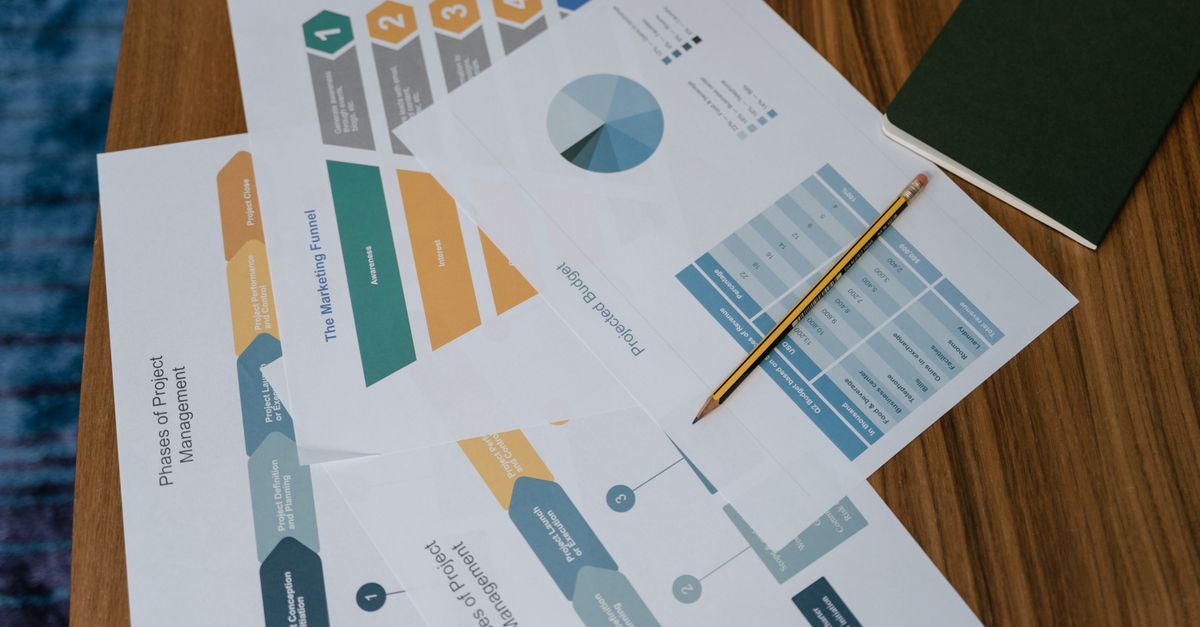
The CMO Council in partnership with MartechTribe introduced the Apex Martech Matrix Innovation Insights Brief on July 1. The framework predicts business value of martech investments based on company size, industry, maturity and strategic priorities. Global martech spend is moving toward $215 billion according to [Demand Gen...

Wednesday, July 8, 2026, 9:01 AM PT by ORM Editorial Team
AI assistants answer questions, compare products, and recommend brands without sending users to websites. Success depends on whether AI systems can find, trust, and surface brands across the broader information ecosystem. Google has advanced Search to make experiences more conversational, multimodal, and persistent through AI Overviews.
The search ecosystem has moved away from reliance on traditional blue links.

Wednesday, July 8, 2026, 6:25 AM PT by ORM Editorial Team
AI is changing what the CMS is expected to do. The CMS is becoming the control layer for how brands are discovered, understood, personalized, and transacted across human and machine experiences according to [MarTech](https://martech.org/the-cms-is-becoming-the-ai-operating-system-for-brands/).
For years the CMS was a publishing platform where marketers created content, editors approved it, and customers consumed it on websites. That model is evolving.
Monday, July 6, 2026, 7:40 AM PT by ORM Editorial Team
Forrester projects worldwide martech spending to surpass $215 billion by 2027. Martech utilization sits around 49% industrywide according to Gartner. These figures appear in coverage at MarTech on turning marketing complexity into competitive advantage.
Customer data platforms must connect with analytics tools and commerce systems. McKinsey survey findings identify stack complexity and data integration as the most common barriers to full martech value.

Thursday, July 2, 2026, 6:13 AM PT by ORM Editorial Team
A client reported that after Google’s May 2026 core update a flagship product page fell from position two to eight in traditional search results. The page retained sufficient ranking to appear in organic results, yet the brand was absent from answers generated by ChatGPT, Google AI Mode and other AI search engines.
BrightEdge data show that only 16.5% of sources cited in AI Overviews also rank in Google’s organic top 10 for the same query.
Saturday, June 20, 2026, 11:05 AM PT by ORM Editorial Team
Heinz Marketing published its weekly selection of B2B sales and marketing articles on Saturday, focusing on brand differentiation, AI output quality, and sales cycle delays.
An article from The Drum states that most B2B brands were already visually interchangeable before AI tools became widespread.

Friday, June 12, 2026, 7:18 AM PT by ORM Editorial Team
On Feb. 1, 2024, Google and Yahoo began enforcing new requirements for bulk email senders defined as those sending more than 5,000 messages to Gmail addresses in one day, according to [MarTech](https://martech.org/new-rules-for-bulk-email-senders-from-google-yahoo-what-you-need-to-know/).
All three providers require bulk senders to implement SPF to identify authorized email servers, DKIM to add digital signatures verifying authorized senders, and DMARC to specify actions on authentication...

Wednesday, June 10, 2026, 11:22 AM PT by ORM Editorial Team
Gartner released three surveys this week at its Marketing Symposium/Xpo. One survey found that 49% of U.S. consumers agree GenAI has made the quality of content available worse.
The March survey of U.S. consumers showed 57% of Gen Z and Millennial respondents said marketing content quality was worse because of AI. Kate Muhl, VP Analyst in the Gartner Marketing practice, stated that AI-generated content is increasing volume but not necessarily value.

Wednesday, June 10, 2026, 10:51 AM PT by ORM Editorial Team
Marketing leaders are allocating larger shares of budgets to digital media and customer acquisition, according to MarTech. The shift comes as generative AI raises consumer doubts about content quality.
Gartner’s 2026 CMO Spend Survey found that awareness and conversion activities represent 62.6% of media spending. Digital media accounts for more than two-thirds of total media investment. Customer acquisition spending is increasing.

Tuesday, June 9, 2026, 1:04 PM PT by ORM Editorial Team
B2B CMOs are entering a new phase of AI adoption after an initial wave focused on experimentation with content generation, translation, summarization, image creation and productivity gains.
Many marketing teams are already using AI, yet usage remains concentrated in content and creative applications. This concentration can create a false sense of progress when AI is applied only to make existing activities faster.

Friday, June 5, 2026, 7:18 AM PT by ORM Editorial Team
The average enterprise now has every martech tool it could ask for, yet most still say stack complexity and integration are the primary blockers to realizing value, according to Demand Gen Report.
CMOs and CIOs have spent the last decade building increasingly sophisticated martech ecosystems by adding customer data platforms for personalization, journey tools for orchestration, AI for optimization, and new analytics for attribution. Most martech stacks are not the real problem.

Thursday, June 4, 2026, 6:28 AM PT by ORM Editorial Team
Vibe coding lets more people build software through natural-language prompts instead of traditional programming. This approach speeds experimentation and delivery for marketing technology teams. Organizations must still secure, maintain, validate, and document the software they ship, according to [MarTech](https://martech.org/how-to-make-vibe-coding-sustainable-inside-the-enterprise/).
AI tools generate code faster than humans can write it.

Wednesday, June 3, 2026, 8:46 AM PT by ORM Editorial Team
A recent panel at the May edition of The MarTech Conference found that almost all attendees said they were not at all confident in their ability to succeed in a cookieless world, according to [MarTech](https://martech.org/how-to-activate-first-party-data-across-the-b2b-journey/).
Many first-party data conversations remain limited to risk mitigation, consent banners, and legal frameworks. Compliance is treated as a required baseline rather than a complete strategy.
Wednesday, June 3, 2026, 8:08 AM PT by ORM Editorial Team
Salesforce unveiled a new set of agentic marketing tools at its Connections event in Chicago. The tools automate portions of the marketing workflow including prospect identification, content creation, campaign launches and performance optimization.
Salesforce highlighted two agents from Qualified. Piper identifies and qualifies inbound website visitors around the clock before routing prospects to sales teams.

Friday, May 29, 2026, 1:23 PM PT by ORM Editorial Team
Heinz Marketing has built an AI agent that audits B2B marketing technology stacks by ingesting tool lists from contracts and login records, mapping each tool to functions such as demand gen or attribution, and producing a structured Resources & Tech Assessment Brief.
The average B2B marketing tech stack contains platforms adopted under prior leadership, point solutions with 80 percent functional overlap, and integrations that have not delivered expected attribution.

Friday, May 29, 2026, 7:21 AM PT by ORM Editorial Team
Nearly half of B2B SaaS companies have cut or reduced marketing roles because of AI. Most reductions occurred through quietly stopping backfills and allowing attrition to shrink teams, according to MarTech.
Wynter’s report “How B2B Marketing Actually Uses AI” surveyed 100 directors, VPs, and heads of marketing at mid-market and enterprise SaaS companies.

Friday, May 29, 2026, 7:19 AM PT by ORM Editorial Team
Most brand teams maintain dashboards, weekly reports and periodic social feed reviews to monitor competitors, according to MarTech. These systems surface what happened last week but do not identify shifting dynamics or implications for the brand.
Social listening platforms count mentions, score sentiment and highlight activity after it occurs.
Thursday, May 28, 2026, 5:49 PM PT by ORM Editorial Team
According to Heinz Marketing, B2B agencies encounter varied AI projects across companies and teams. The post focuses on three observed implementations involving agents, RAG tools, and generative capabilities.
One company targeting local businesses built a script with Claude Code that searches public records weekly for qualifying businesses. The script then gathers web information and populates template fields before running on a cloud server.
Thursday, May 28, 2026, 10:12 AM PT by ORM Editorial Team
According to [MarTech](https://martech.org/ai-is-not-the-skill-email-marketers-need-most/), 35% of companies prioritize AI skills when hiring email marketing teams based on Litmus The State of Email 2026 findings. At the same time, 31% of teams prioritize email campaign strategy and planning.
The MarTech article states that AI serves as a tool for drafting campaign copy, suggesting subject lines, generating content variations, and revealing patterns.

Thursday, May 28, 2026, 7:37 AM PT by ORM Editorial Team
A SaaStr AI Agent API Report Card that evaluated 152 B2B software APIs found marketing platforms averaging 63.6 out of 100 while the overall average across all categories reached 72.
The report graded APIs on six criteria scored 0-10 each for a maximum of 100 points: API design, events and streaming support, authentication, rate limits, SDK quality and documentation, and agent readiness. Scores came from independent evaluations by Claude, GPT, and Gemini models.

Wednesday, May 27, 2026, 6:34 AM PT by ORM Editorial Team
Many marketers missed the initial opportunity to reimagine their organizational models before implementing AI technology, according to [MarTech](https://martech.org/ai-wont-save-a-broken-organization/). They now operate at the evolving intersection of AI, data, and modern marketing strategy.
Ryan Warren, chief CRM officer at Razorfish, states that marketing teams had an opportunity to harness AI and change the way they work but many missed it.

Friday, May 22, 2026, 10:08 AM PT by ORM Editorial Team
Metadata already serves as the currency for organic search through schema markup, product-feed attributes, image descriptors, DAM tags, provenance signals, and taxonomies. According to [MarTech](https://martech.org/the-ai-marketing-advantage-hiding-in-your-metadata/), this structured data helps Google understand, index, and present content across Search, Images, and product experiences.
AI has elevated metadata from search optimization to the cornerstone of how brands are found, understood,...

Friday, May 22, 2026, 9:34 AM PT by ORM Editorial Team
Consumers are giving mixed signals about AI content in marketing. People like ads and content that feel useful and relevant, but many are still turned off by marketing that comes across as robotic, emotionally empty, or a little too invasive. Seventy percent of consumers said they can usually spot an AI-generated ad because it feels like it is missing its soul, according to Canva’s report covered by MarTech.
Another 69% worry the future of advertising will become a sea of AI-generated slop,...

Thursday, May 21, 2026, 6:57 PM PT by ORM Editorial Team
AI is now the main driver of increased martech budgets, according to MarTech. Research on martech performance finds that only 49% of martech tools are actively used. Only 15% of organizations qualify as high performers who meet strategic goals and demonstrate a positive ROI.
This gap produces workslop, defined as low-quality generic output that results when teams face pressure to use AI for higher volume without time for quality control.
Leadership often fails to define how to use AI and what...

Thursday, May 21, 2026, 6:11 PM PT by ORM Editorial Team
Paid media managers begin Mondays pulling numbers from Google Ads, Meta, LinkedIn, TikTok, and Reddit, then reformat the data in spreadsheets for 10 a.m. reports. Each network maintains its own attribution logic, campaign structure, and conversion definition. The data resides in separate locations and follows different formats.
Industry data places the average paid media manager at 5 to 9 hours per week on administrative tasks alone.
Wednesday, May 20, 2026, 7:12 AM PT by ORM Editorial Team
New data from the Storyblok Global Speed-to-Market Benchmark Report identifies approval processes, developer dependencies, and tech constraints as primary barriers to faster go-to-market performance. Only 22.5% of teams say they consistently deliver at the pace the market demands, according to [MarTech](https://martech.org/why-some-teams-launch-faster/).
The approval process is the single biggest bottleneck in the GTM workflow, cited by more than 50% of teams.

Tuesday, May 19, 2026, 7:09 AM PT by ORM Editorial Team
AI recommendation engines rely on reviews, comparisons, and customer signals to decide which brands to surface. According to [MarTech](https://martech.org/customer-experience-outweighs-brand-in-ai-assisted-shopping/), these engines focus less on marketing narratives and more on customer experience when evaluating brands.
AI recommendation engines rely on repeated external signals to determine which brands feel trustworthy, reliable, and relevant to a specific prompt.
Monday, May 18, 2026, 9:19 AM PT by ORM Editorial Team
Publicis Groupe entered into an agreement to acquire LiveRamp on Sunday. The transaction values the company at $38.5 per share in an all-cash deal, representing a 29.8 percent premium over LiveRamp's closing share price on May 15.
LiveRamp operates as a data collaboration platform. It supplies identity resolution, privacy-safe data collaboration, data clean rooms, cross-platform measurement, and first-party data activation.

Monday, May 18, 2026, 9:02 AM PT by ORM Editorial Team
The May 2026 MarTech Conference featured seven live panel discussions for marketing and marketing operations professionals. All told, the event transcripts totaled nearly 150 pages. According to [MarTech](https://martech.org/10-of-the-most-insightful-quotes-from-the-may-2026-martech-conference/), organizers mined the transcripts and selected 10 quotes.
Alec Haase, general manager of AI products at Hightouch, stated: “The value exchange isn’t really a one-time thing at the point of collection.

Friday, May 15, 2026, 10:16 AM PT by ORM Editorial Team
Marketing teams have more ways than ever to create, distribute, adapt, and measure content according to MarTech. Technology has made production faster while templates have made execution more efficient and automation has made scale feel increasingly achievable. However, more creative output does not automatically translate into greater marketing impact.
The challenge is no longer simply producing more work. It is enabling creative work to remain effective as complexity increases.

Friday, May 15, 2026, 8:20 AM PT by ORM Editorial Team
The average B2B organization manages between 12 and 20 martech tools, yet fewer than 10% of brands sustain strong brand cohesiveness across their product and channel portfolios, according to [MarTech](https://martech.org/build-a-martech-stack-that-makes-it-easy-to-manage-your-brand/).

Friday, May 15, 2026, 5:43 AM PT by ORM Editorial Team
At the May 2026 MarTech Conference, operations leaders discussed how AI adds governance complexity despite promising efficiency, focusing on preventing the stack from becoming a 'spaghetti mess' of disconnected AI point solutions, according to MarTech.

Thursday, May 14, 2026, 10:14 AM PT by ORM Editorial Team
Marketing leaders face growing pressures as AI transforms how brands gain visibility, with only 49% of Fortune 500 top marketers holding the CMO title, down from 55% a year ago, according to a Forrester report cited in a MarTech article. Over one in five Fortune 500 companies have changed their entire marketing leadership in the past 12 months, and the average CMO tenure has fallen to 3.9 years, the shortest in the C-suite.

Tuesday, May 12, 2026, 8:49 PM PT by ORM Editorial Team
A Gartner survey conducted in early 2026 found that CMOs are allocating an average of 15.3% of their marketing budgets to AI initiatives, even as only 30% report that their organizations have mature or fully developed AI readiness capabilities. This gap highlights that 70% of CMOs view becoming an AI leader as a critical goal for 2026, yet the same percentage admits their internal processes are not mature enough to implement and scale AI effectively, according to...

Monday, May 11, 2026, 2:16 PM PT by ORM Editorial Team
At the May 2026 MarTech Conference, a panel moderated by A. Lee Judge, co-founder and CMO of Content Monsta, featured marketing leaders Dale Bertrand, Melanie Deziel, Lexie Haggerty from Braze, and Jordache Johnson discussing how to preserve authentic storytelling in an AI-driven era, according to [MarTech](https://martech.org/reclaiming-the-power-of-the-story-fueled-by-data-and-ai/).

Monday, May 11, 2026, 9:54 AM PT by ORM Editorial Team
SOCi and Google are hosting an exclusive webinar titled 'Winning the Next Era of Local Visibility' on June 3 to address how AI is changing local search dynamics. According to [MarTech](https://martech.org/winning-the-next-era-of-local-visibility-how-ai-is-changing-local-search/), AI-powered experiences such as Google AI Overviews, Gemini, and Ask Maps are altering how customers discover local businesses, with people now asking more detailed, conversational questions that influence which...

Friday, May 8, 2026, 9:47 PM PT by ORM Editorial Team
At the May 2026 MarTech Conference, a panel moderated by Angela Vega, director of capabilities and operations at Expedia Group, featured marketing leaders discussing how brands can deliver personalized customer experiences without appearing invasive. The session, titled "Winning attention without losing trust: creating meaningful moments across the customer journey," included Alec Haase, general manager of AI products at High Touch; Sean Nowlin, founder and CEO of Spotlight IQ; and Ed Poppe,...

Friday, May 8, 2026, 7:12 PM PT by ORM Editorial Team
On March 31, Gmail introduced AI Inbox, a feature that uses AI to summarize and prioritize emails, aiming to help users manage their inboxes without reaching Inbox Zero. This announcement, as detailed in the source, involves AI deciding which emails matter before users scroll, potentially affecting how emails from marketers are seen, given that Gmail users account for more than 25% of the world’s inboxes.

Thursday, May 7, 2026, 5:41 AM PT by ORM Editorial Team
Digital marketing has settled into a stable system over the past few decades, relying on predictable cores like SEO, content marketing, social media, and digital advertising, but AI search has disrupted this by drawing on broader signals and exposing inconsistencies in fragmented campaigns, according to [MarTech](https://martech.org/ai-seo-punishes-lazy-marketing-strategies/).

Wednesday, May 6, 2026, 7:07 AM PT by ORM Editorial Team
According to [MarTech](https://martech.org/why-performance-marketing-needs-more-than-roas/), return on ad spend (ROAS) has long been the default metric for evaluating marketing performance, but it is no longer sufficient as digital ecosystems grow more complex and organizations demand clearer accountability for growth.

Monday, May 4, 2026, 6:14 AM PT by ORM Editorial Team
AI is already transforming marketing by altering discovery, buying decisions, and market competition, yet many marketing leaders are primarily evaluated on campaign execution rather than guiding enterprise transformation, according to MarTech. Gartner research indicates that 82% of business leaders believe their company’s brand and culture must evolve to keep pace with AI, but only 15% of CEOs see their marketing leader as strongly AI savvy, creating a gap that threatens marketing’s strategic...

Friday, May 1, 2026, 4:48 AM PT by ORM Editorial Team
As discussions around the 'SaaSpocalypse' highlight companies replacing software vendors and IT services with AI-enabled tools, marketers are reassessing which platforms remain essential in their stacks, according to [MarTech](https://martech.org/why-affiliate-marketing-still-needs-humans-in-the-ai-era/).

Thursday, April 23, 2026, 9:49 AM PT by ORM Editorial Team
At the Spring 2026 MarTech conference, participants in the MarTech Vibe Marketing Lab engaged in hands-on collaboration to create marketing tools for Harlem Grown, a nonprofit dedicated to urban farming and youth mentorship, where one team developed a story engine to transform a single impact story into various content pieces while maintaining consistent voice.
Wednesday, April 22, 2026, 9:33 AM PT by ORM Editorial Team
B2B marketers repeatedly describe data as their most valuable asset, comparing it to gold or oil, and invest heavily in tools like MAPs, CRMs, CDPs, and various martech solutions that consume a significant portion of their budgets. Despite this investment, reporting now includes analytics from digital campaigns, a shift from past practices where B2B companies advertised in trade publications with limited evidence of benefits, yet more data has not clarified decision-making as marketers fail to...

Tuesday, April 21, 2026, 8:01 AM PT by ORM Editorial Team
Microsoft is introducing AI Max for Search campaigns, which expands query matching and personalizes ad delivery across Copilot and Bing, as part of updates designed to help advertisers maintain visibility as AI agents take on larger roles in discovery and transactions, according to [MarTech](https://martech.org/microsoft-updates-ads-platform-for-ai-driven-discovery/).